
The Kia Seltos, a significant player in the mid-size SUV segment since its 2019 debut, has undergone a fundamental structural evolution. While the model was instrumental in driving SUV demand alongside its sibling, the Hyundai Creta, its initial safety performance faced scrutiny due to a three-star Global NCAP rating. In response, Kia has implemented a major architectural change for the latest generation, moving away from the K2 platform in favor of the more advanced K3 architecture. Hyundai to Introduce Bayon-Based Sub-4m SUV in 2026 with New Hybrid-Ready Powertrain
Engineering a Safer Foundation: The K3 Platform
The transition to the K3 platform represents a strategic shift in the vehicle’s engineering. This new architecture, which also underpins the Kia Niro sold in international markets, focuses on improving crashworthiness through several technical upgrades:
- Increased application of hot-stamped and high-strength steel to bolster the passenger cell.
- Enhanced torsional rigidity, contributing to both improved handling and better impact energy management.
- Refined structural layout designed specifically to accommodate and improve the functionality of Advanced Driver Assistance Systems (ADAS).
- Redesigned chassis components aimed at reducing Noise, Vibration, and Harshness (NVH) while maintaining cabin space.
International Crash Test Benchmarks
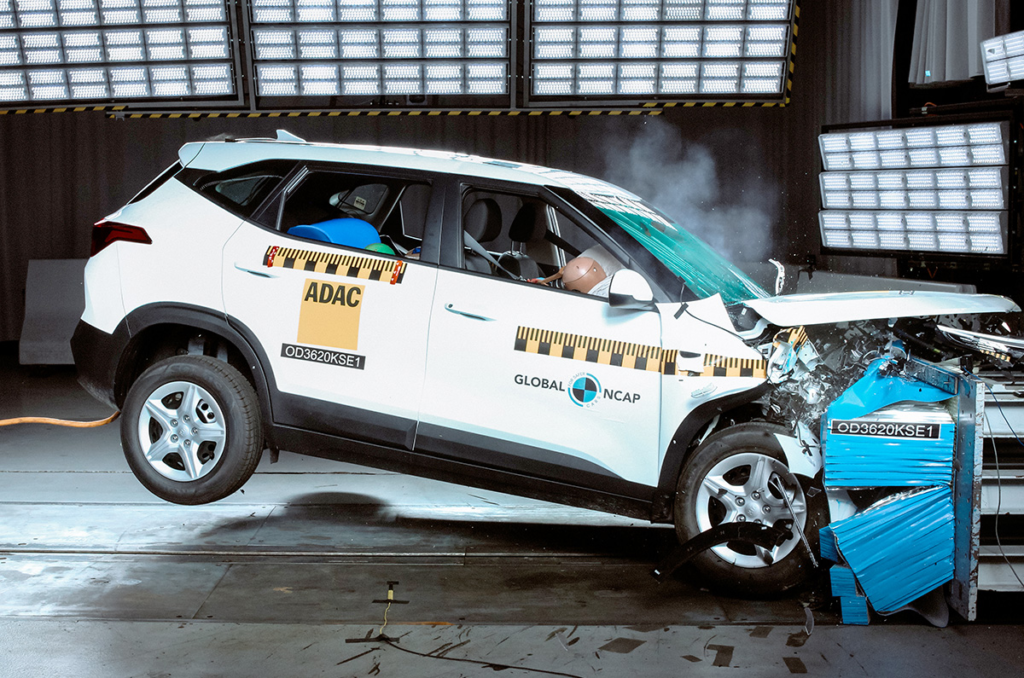
While the India-specific Bharat NCAP (BNCAP) results for the new Seltos are pending, the performance of the K3 platform in global markets provides a technical indicator of its capabilities. The Kia Niro, utilizing the same K3 architecture, has undergone rigorous testing by Euro NCAP and ANCAP:
- Euro NCAP: The platform earned a four-star rating in its standard configuration, which increased to five stars when equipped with a comprehensive radar-based safety pack. It achieved high scores of 91% for adult occupant protection and 84% for child occupant protection.
- ANCAP: The architecture maintained its consistency in Australian testing, scoring 88% for adult safety (33.71 out of 38 points) and 84% for child safety (41.62 out of 49 points).
Market Outlook and BNCAP Expectations
Kia has already updated the Seltos feature list to include six airbags as standard equipment. However, the move to the K3 platform addresses previous concerns regarding structural integrity. Unlike Euro NCAP, which places heavy emphasis on active ADAS performance, the BNCAP protocol focuses primarily on the vehicle’s physical crash performance. Given the K3 platform’s robust performance in international testing, the new Seltos is expected to target a four-to-five-star rating in upcoming domestic assessments, marking a significant step forward from its predecessor.